Showing posts with label writing. Show all posts

Chapter One: Mastering the ABCs of Excellent Writing by Randy C. Dockens & Robert Irvin


Title: Mastering the ABCs of Excellent Writing
Author: Randy C. Dockens & Robert Irvin
Publication Date: April 4, 2024
Pages: 250
Genre:Writing Skill Reference/Authorship/Fiction Writing Skill Reference

The authors of this book (one a writer/author; one an editor) explain what they wished they had known when they began their writing journeys. This book will speed up your writing proficiency and aid your goal of being published with excellent material your readers will enjoy.

Why this book on writing? There are two things we learned the hard way and want you to gather the easy way. One, rules are made to be broken—but you want to break them only with intentional purpose. And two, you, not the rules, are what make your stories, your writing, unique from all others.

We cover various writing techniques and how to make your writing something readers will keep enjoying, but we also help you with the artistic side of writing, meaning what’s inside you, your writing technique, and your brand.

This easy-to-enjoy manual is written in a unique alphabetical style, filled with tips and extra-information boxes at the end of each chapter, and has a number of helpful additions following the final chapter.


Chapter One:

All verbs, as every English teacher we had in school drilled into us, are action words. That is true.

But not all verbs are created equal. And that also is true.

So let’s start, as a very famous old song once said, at a very good place to start: the beginning. And great stories start with great action. And that means verbs.

Think of verbs as the engine of strong writing. No compelling story is told without action, and thus without verbs. From one of my (Bob’s) favorite books, The Day Christ Died, by Jim Bishop, I pulled just one paragraph. It’s not a pretty picture in the mind’s eye—this is when Jesus is under arrest by Roman guards shortly before going to Pilate—but notice the action words.

Someone in the group had a more amusing idea. He got a cloth and blindfolded Jesus. The guards danced around him, cuffing his face and simpering: ‘Act the prophet, please. Who is it that struck you?’”

The first two sentences are setup for the scene. (The verbs are usual ones to get the paragraph moving: had, got, blindfolded.) But look at the next sentence: it teems with writing that captures the mind: danced, cuffing, simpering. What if Bishop had chosen, say, the verbs moved, hitting, and asking? (Quick exercise: replace Bishop’s three verbs with the latter three. Done that way, the sentence then isn’t even one-tenth as impactful.)

As this simple paragraph illustrates, all verbs are far from equal. Spend some time with your action words, and it will help drive your writing. But let’s explore more.

Not only are verbs quite different, the terminology can be confusing. Ever hear the terms “strong verb” and “weak verb”? Even those tags can be confusing, and not everyone means the same thing when they use these terms. Let’s keep digging.

Weak verb is a term meaning the root of the verb doesn’t change when you go from present tense to past tense to its participle form. Typically, all that happens is an -ed or -t ending is added. Here are a few examples (present – past – participle forms):

Walk – walked – walked

Look – looked – looked

Sleep – slept – slept

Strong verb, on the other hand, is a terminology meaning the root of the verb does undergo a transformation when its root is changed to its present, past, or participle forms. A few examples:

Run – ran – run

Bring – brought – brought

Swim – swam – swum

One takeaway here is the writer needs to understand that different verbs have different forms when their tenses change. After all, you want your writing to have strong grammar. Believe us, even readers who say they don’t judge a book by its grammar do judge a book by its grammar. They may not realize this is what they are doing, but if your sentences “read funny,” as some might say, their interest in your work will wane quickly. Only a few loose uses and you may well lose them.

So how can you tell which classification the verb is in? Unfortunately, you just have to learn them. There is no particular rhyme or reason. It just is, as they say. Therefore, if you don’t know, then look it up. That’s the best advice.

For writers, though, when one says “use a strong verb,” they are likely meaning to use a more appropriate verb, or one that conveys what you are really meaning, or one that brings forth the strongest action. Here are a few tips that, hopefully, you’ll find helpful.

Adverbs

First, even if you have a strong feel for what an adverb is, let’s define it. You can find a more complete definition at Merriam-Webster.com. The heart of an adverb is a word that modifies (expands on, explains further) a verb, adjective, another adverb, a preposition, a phrase, a clause, or even a sentence. But let’s stay focused on verbs and modifying verbs here.

If you’ve used an adverb, see if you can think of a verb that conveys what you mean without the adverb. For example:

Harriet closed the door angrily.

Probably not a sentence one would normally write, but let’s make the point more vividly here. So you can probably quickly think of a verb that coveys this meaning without having to use an adverb at all. Here’s a somewhat obvious one:

Harriet slammed the door.

The verbs closed and slammed would both be considered weak verbs, by definition, but clearly slammed is a verb that conveys a door being closed in an aggressive manner and most typically in anger. This would, then, be considered a better verb to use. Some might say a stronger verb (and you could make that argument easily), not because of the definition that we just gave, but because slammed conveys the action you are meaning much better than does closed.

Another way to look at this is whether you must mentally ask yourself, as a reader, the how or why behind the word used. How did they close the door? Did they gently close the door, slam the door, or just close it in a normal fashion? Why did they close the door: to prevent someone from hearing them, because they were mad or angry, or it was just a normal everyday thing to do? If your verb itself doesn’t convey this, then think of a more appropriate verb to use that conveys what you’re really intending.

You may sometimes read to never use adverbs, but don’t get caught up in this trap. I (Randy) did in the beginning. Here’s a tip: when you read a blog from someone talking about writing and they use the word never, substitute never overuse in that spot instead. All forms of speech are needed to have strong prose and dialogue. However, as a writer, you need to master when to use each one. Granted, adverbs are to be used sparingly since there is typically a better or more appropriate verb you can use to convey the action (making use of the adverb unnecessary). So, the better advice, I think, is to use the verb that best conveys what you want the reader to take away from your writing. And make it a sentence in which the reader can get in the moment with you and not have to think about what you are saying, but be with you in what you are saying. You want your reader inside your story, seeing and feeling everything you are writing. You don’t want them above the story, seeing it from a distance and having to analyze sentence structure to understand what you are trying to say.

Here is an example where an adverb is needed to convey what you really want to tell a reader:

Amanda sat quite still, daring not to breathe as the footsteps came closer, their sound hauntingly familiar.

Now one can get rid of the word hauntingly and change the sentence structure to avoid it. Yet most would find the sentence below doesn’t convey the same tone and feel:

Amanda sat quite still, daring not to breathe as the footsteps came closer, their sound haunting her memory.

So, to reiterate this simple but key point, but said in a different way: be purposeful in how you use adverbs. Are you using the adverb to convey something (a tone, a scene, a feeling) that you can’t do with a verb alone? If you can find a more powerful verb that conveys the same, then use it. If not, use the adverb to get your reader immersed in your story. Use them sparingly, though. A good adverb can enhance; too many can detract.

Passive Voice

I’m sure, like we both did, you also heard from an English teacher to always use active voice and never passive voice. Despite the bad rap, there is nothing wrong with passive voice, but again, it should be used purposefully and sparingly. Typically, passive voice does not get your reader immersed in your story. Active voice does. An example:

Greg had written the story for Ruth to enjoy.

Not a bad sentence as sentences go, right? But there is no real action here. Therefore, the following sentence would typically be better:

Greg wrote the story for Ruth to enjoy.

Or, if you can get it in present tense, it is even more impactful:

Greg writes the story in the hope that Ruth will enjoy it.

It just has a fresher feel to it and is more engaging. Doesn’t it?

But judging passive voice by sentence alone does not quite do it justice. There are definitely times to use passive voice. Once again, though, with a purpose. Remember to always be purposeful in whatever you do as a writer.

Here’s a trick to the “dreaded, to be avoided” passive voice: it can be extremely effective in setting a scene. One example:

John’s travels had been torturous and taxing. He had received not a wink of sleep for three days. None of his travel companions understood the stress he had been under before he left. They were so absorbed in their own problems they had no time to consider his.

So this sets up a scene. Now, if the whole scene would be written in this manner, it would become quite boring. But this can set up an action scene. The passive voice fills the reader with knowledge, and then an active voice pulls them into the story with that knowledge. Again: be purposeful.

A  A  a  A  A  A  A

More Tips and Information (Summing Up, and Perhaps a Bit More)

From Randy, the Author
Always use verbs that best paint the action you are trying to convey.Adverbs paint a mood or setting. Use them sparingly so they have maximum impact.Attempt to use active voice when possible.Avoid passive voice, when possible, except for scene-setting or to show that a large amount of time has passed between scenes.
From Bob, the Editor
Are you using verbs as the engine of your writing? Drive your writing forward with impactful verbs.Ask yourself: does this verb feel a little flat? Try another, or another. You might find another action word works better. Actively compare.Avoid doing this all day long, however, with every verb. That’s not possible, and you need to get on with your writing. But do go after the ones you know can be improved. Usually, you’ll find them. (Or maybe a good editor can help in certain cases. Do the work on the front end, however, and your product will be better for it.)

About the Authors:


Dr. Randy C. Dockens
has a fascination with science and with the Bible, holds Ph.D. degrees in both areas, and is a man not only of faith and science, but also of creativity. He believes that faith and science go hand in hand without being enemies of each other.

After completing his bachelor’s degree in pharmacy from Auburn University he went on to graduate school at Auburn and completed his first doctorate degree in Pharmaceutics. He began his scientific career as a pharmacokinetic reviewer for the Food and Drug Administration and later joined a leading pharmaceutical company as a pharmacokineticist, which is a scientist who analyzes how the human body affects drugs after they have been administered (i.e, absorbed, distributed, metabolized, and excreted).

Through the years, he has worked on potential medicines within several disease areas, including cardiovascular, fibrosis, and immunoscience to seek and develop new and novel medicines in these therapy areas.

He has also had his attention on the academic study of the Bible. He earned a second doctorate in Biblical Prophecy from Louisiana Baptist University after receiving a master’s degree in Jewish Studies from the Internet Bible Institute under the tutelage of Dr. Robert Congdon.

Randy has recently retired from his pharmaceutical career and is spending even more time on his writing efforts. He has written several books that span dystopian, end-time prophecy, science fiction, and uniquely told Bible stories. All his books, while fun to read, are futuristic, filled with science to give them an authentic feel, have a science fiction feel to them, and allows one to learn some aspect of Biblical truth one may not have thought about before. This is all done in a fast-paced action format that is both entertaining and provides a fun read for his readers.

He has also written some nonfiction books as well. One is to show how all humans are connected from God’s viewpoint by looking at biblical prophecy. This book shows how all scripture is connected and inclusive of everyone. In addition, he and his editor have written a book about writing. This book not only addresses the techniques of writing, but what makes writing unique to each author. It conveys not only how to better hone one’s craft of writing but also the brand an author wants to portray. This helps an author make their writing unique as well as captivating for his/her audience. A companion book to this one regarding self-editing techniques will also soon be available.

You can visit Randy’s website at www.randydockens.com. Connect with him on Twitter, Facebook, Goodreads and Instagram

Robert Irvin has been a professional writer and editor for his entire adult life. He started in journalism and worked in all levels of newspaper reporting and editing, from the proverbial cub reporter to bureau chief, night city desk editor, and newsroom editor. Under his leadership, the Middletown (Ohio) Journal won several top state newspaper placements in 2003-2004. He has written award-winning pieces for several magazines.

In 2005 he chose publishing and went to Standard Publishing (Cincinnati) where he worked with authors from across the nation and internationally on youth ministry materials for the former Christian-based publisher, which had a rich history serving American and Canadian churches dating to 1869. In 2011, Robert went independent. He helped develop a homeschool curriculum site for The Old Schoolhouse Magazine during a two-year period in which he worked for this trailblazing homeschool organization. He does the majority of his work with Christian Book Services. He has ghostwritten long portions of books for authors and entire books for a World War II veteran’s memoirs (written 2013-2015 at age 89-91!) and a former NFL quarterback’s story of mentoring his high school football star son.

Robert has edited virtually every type of book, from business to novels to theology to sports to memoirs to abuse survival stories, and much more. His credits include scores of books. He has spoken at or served as faculty at various writing conferences.

He enjoys family, running, the outdoors, bad golf (like many, he has the bug, which just won’t go away), a heated game of Scrabble, virtually any sport, and reading any book that even remotely interests him.

Robert has a BA from Ohio State University in Journalism. He and wife Joan have four children. Reach Bob at bobirvin642@gmail.com.

Visit him on Facebook at https://www.facebook.com/bobjoan.irvin/ and LinkedIn at https://www.linkedin.com/in/bobirvin31/.
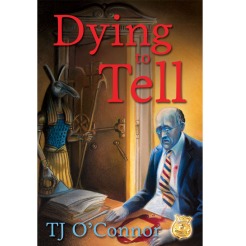
Chapter reveal: Dying to Tell, by Tj O’Connor


DTT Cover 800 jan 2016 copyTitle:  DYING TO TELL
Genre:  Mystery
Author:  Tj O’Connor
Website:  www.tjoconnor.com
Publisher:  Midnight Ink
Purchase on Amazon
About the Book:
In Dying to Tell, the latest mystery by award-winning novelist Tj O’Connor, Oliver “Tuck” Tucker—dead detective extraordinaire—is back for the case of a lifetime, or, rather, the afterlifetime.  
A former police detective who now solves mysteries from beyond, Tuck doesn’t appreciate just how perilous the past can be till his wife, Angel, is nearly killed and reclusive banker William Mendelson is found dead in a hidden vault.  Tuck knows there’s more to Mendelson’s murder than decades-old skullduggery. As murderers, thieves, and spies descend on small-town Winchester, Tuck joins up with Angel, old detective partners, and a long-dead grandfather still on an army mission from 1942. With the case unfolding around him, Tuck must confront haunting family secrets and the growing distance between his death and Angel’s life.  The outcome could be a killer of its own, but Tuck is set on solving this case. Dead set.  After all, some things never die…
 CHAPTER ONE
Dying is as perilous as secrets and lies. Depending, of course, on
who is keeping the secrets and who is telling the lies. Trust me, I’m
in the secrets and lies business—I’m a homicide cop. Well, I was.
Secrets and lies can lead to big problems—like murder—although
it’s not in the secrets or the lies themselves. It’s that someone always
wants to tell. The urge is like an addict needing a fix. You need to
tell—you cannot help it—you have to tell. Sometimes it’s out of
guilt. Sometimes it’s for revenge. Sometimes it’s just spite. No matter,
in the end, someone is always dying to tell.
And then bad things happen.
An auburn-haired beauty with green eyes—eyes that could hypnotize
vampires—walked down the outdoor Old Town Winchester
mall through a dusting of blowing December snow. She stopped
momentarily to adjust her long wool overcoat over her athletic legs
and curvaceous, bumpy body—a good bumpy. She looked around
the mall, twice back from where she’d come, and turned down the
sidewalk to the annex behind the First Bank and Trust of Frederick
2
County. When she caught sight of me, her smile—one that normally
could charm snakes—looked more like that of a cobra ready to strike.
I ran to catch up.
No, not because I’m obsessed with vampires or snake charmers.
And no, I wasn’t stalking this classy university professor on her way to
some mysterious early morning appointment. She was my wife, but
she was on her way to a mysterious appointment—and I didn’t know
where or why. So, being the former detective I was, I followed her.
“Angel, where you going?”
“To the bank.” She reached the employee entrance door and stopped.
“Why are you following me?”
Silly question. “Because you’re going to the bank at seven in the
morning. It’s closed.”
She checked her watch. “And it’s almost seven thirty.”
“Haven’t you ever heard of banker’s hours? Who do you think is
here this early?”
She rolled her eyes—a signal that my wit or charm had disarmed
her. “I’ll explain later at home.”
“I’ll wait. We can get pancakes.”
“You hate pancakes. What’s wrong with you lately? Are you spying
on me?”
I did hate pancakes, but watching her eat steak and eggs—my
favorite breakfast—was much more painful. “Spying, no. Me?”
“I didn’t think the dead could be so frustrating.”
Oh, did I mention I’m dead? No? I’m Tuck, formerly Detective
Oliver Tucker of the Frederick County Sheriff ’s office. Now I’m just
Tuck to my friends—those living and dead. I was a hotshot homicide
detective before I went investigating noises in my house late
one night. Those noises led someone to put a bullet in my heart.
3
That was nearly two years ago. And it’s taken me that long to come to
terms with it. Sort of. It helped to catch the bastard who shot me and
put an end to his killing spree. And it helps to have my wife, Angel,
and Hercule, my black Lab, around, too. Dead and gone are two totally
different things. I’m dead, but as Angel and Hercule will tell
you—well, maybe not Hercule, he’s a dog—I’m just not gone.
“Angel, listen, I …”
The steel security door at the employee entrance door burst open
and banged against the brick annex wall. A masked gunman—a tall,
strong-looking figure dressed in dark clothes and the traditional bank
robber’s balaclava—ran from the annex, turned, and fired a shot from
a small revolver. He slipped on the sidewalk, freshly adorned with an
inch of snow, and crashed to the ground. He cursed, jumped to his
feet, and locked eyes on Angel.
“Run, Angel. Run!” I yelled.
Too late.
The gunman scrambled the three yards to us and grabbed Angel
by the arm. “Come here!” He spun her around, pulled her to him
like a shield, and faced the annex doorway.
A bank security guard emerged through the door, gun first.
“Freeze! Let her go!”
The gunman fired two shots in rapid succession. One hit the security
guard and the other slammed safely into the wall two feet beside
him. The guard grunted, staggered back, and went down, striking
his head on a stone flower planter beside the entrance.
“Angel, stay calm,” I said. “I’ll get you out of this.”
“Tuck, help me!”
I dove for the gunman and took two vicious swings trying to free
her. Both blows struck him in the face and neither caused him to
4
flinch. I struck again—lashed a kick to his knee, a jab to the rib cage.
Two more body blows.
Nothing.
“Angel, fight. You have to fight. I can’t help.”
Angel was not a timid or slight woman and she erupted like a
wildcat, taking the gunman by surprise. She twisted and fought
against his grip and nearly broke free.
“Dammit, lady, stop!” He jammed the revolved to her cheek. “Or
else.”
“Tuck,” she cried out, “help me! Tuck …”
Rage boiled over and the explosion started inside me everywhere.
A second later, my fingers tingled and my body burned from
the inside. Seconds were all I had. I lunged forward and struck the
gunman in the throat with the heel of my hand. He staggered back,
relaxing his grip around Angel. I struck two more vicious punches
to his face and followed with a kick to his midsection.
“What the f—” He released her and turned in a circle, his eyes
darting around.
I struck two kidney punches and a sharp kick to the inside of one
leg. He umphed and crumpled sideways down onto one knee. I
crushed him with a two-fisted hammer punch to the back of his neck.
“Run, Angel—go!”
She was only four or five strides from the gunman when he lifted
his revolver and took aim.
A gunshot split the air from behind us, searing a lightning bolt
through me on its way to the bank robber. It struck him in the upper
arm and spun him sideways. A second shot followed but missed him
by mere inches. The gunman was stunned but regained his footing—
his injury wasn’t stopping him. He staggered back, lifted his
5
revolver, and pulled off a shot before he ran around the rear of the
bank annex and disappeared.
“Angel?” I spun around. “Are you all right?”
Apparently, she was fine.
A tall, square-jawed, distinguished man in a heavy wool overcoat
stood beside her now. He had one arm around her, speaking slowly to
her—consoling her—and his other arm hung to his side, a black, compact
.45 semiautomatic handgun in his grasp. He looked like a younger
Clooney, but perhaps better looking. I instantly distrusted him.
“I’m fine, Mr. Thorne, really.” Angel slipped from his arm and went
to the security guard lying on the snowy ground beside the annex
door. She moved over him, checked his wounds, and tried to wake
him. “Call an ambulance. He’s been shot and is unconscious.”
Thorne—a man I’d never seen before—pulled a cell phone from
his overcoat pocket. “Right, and the police. Is Conti all right?”
“I’m not sure.” She investigated a small, thin hole over the guard’s
left breast through his blue suit coat. From inside the coat, she pulled
out a paperback book and held it up. “Agatha Christie saved his
life—Murder on the Orient Express. The bullet hit this and didn’t go
through.”
I put a hand on her shoulder to comfort her—or perhaps, to
comfort me. The rage had passed, and with it, the last of my connection
to the physical world. “Are you okay, babe? I …”
“I’m fine. Go see if anyone else is hurt inside.” She caught Thorne
eyeing her. “There may be more employees inside, right?”
“Not at this hour, no. Let’s wait on the police.”
No, I wasn’t waiting.
6
A voice beckoned me into the bank and I followed. It wasn’t a
voice—not really—it was more like someone telegraphing words
into my head: “It isn’t over, kid, follow me.”
The bank annex was dark. The faint morning light was barely
enough to cast more than a dull haze through the lobby windows. I
went through the grand lobby, down a long, dark corridor into the
executive wing. At the end of the corridor were three offices. I stopped
at the suite of William H. Mendelson, Chairman of the Board, First
Bank and Trust of Frederick County—or so said the brass plaque
below the oversized portrait of a silver-haired titan.
The voice from nowhere whispered, “Hurry up, kid. Inside.”
I followed the voice into the pitch-black office and through a
second doorway in the corner of the room—a closet, I thought—
but it was the entrance to a stairwell leading down into more darkness.
Two floors below, in a sub-basement, the stairwell opened to a
wide landing at a heavy steel security gate that looked like a prison
cell door. Beyond the gate was a small anteroom lit by a dim fluorescent
light overhead. The gate was unlocked and open and the anteroom
beyond was empty except for a small metal work table and
two battleship-gray chairs. In the rear of the room was a monstrous,
turn-of-the-century steel vault door—the nineteenth century. To my
surprise, the door was cracked open, and a sliver of eerie light from
inside the vault etched the anteroom wall.
“Inside, Oliver.” The voice was all around me now. “Go inside.”
Oliver? “Who the hell are you?”
“Just go. Quit stalling.”
I turned and found a strange man—a fellow wraith—leaning
against the anteroom wall watching me—not in a casual way, but
trying to appear casual. He had one hand in a pocket of his leather
7
bomber jacket and he tipped a baseball cap that had a big “W” on it
off his brow with the other.
“Trust me, kid. This isn’t the way it looks.” He threw a chin toward
the vault. “Go on in. I’ve done my part. Now it’s your turn.”
Inside I found the Chairman of the First Bank and Trust of Frederick
County.
William H. Mendelson always reminded me of Lionel Barrymore’s
Mr. Potter from It’s a Wonderful Life. He was a starchy, arrogant
old banker who made rare appearances around town. When he
did, he never spoke, didn’t wave, and never, ever smiled. And to
those who knew him, he was never William or Bill—God, never
Billy, either. He was Mr. Mendelson—or more often, the Chairman.
Like he was Frank Sinatra or something, right?
William sat behind a square steel counting table in the middle of
the vault, facing the door. He was dressed in the same blue doublebreasted
suit he must have worn yesterday—from the smell, he’d
been here a while. A dark blood stain ruined his starched white shirt
and expensive silk tie—the result of a small-caliber bullet hole in his
heart. Both hands rested on the tabletop like he was waiting for a
sandwich—or pancakes—and they were stuck to the blackish gooey
remains of his life.
And hanging in the vault air was the heavy, pungent odor of
smoke.
The bomber-jacketed man—strangely familiar—said, “Remember,
kid, it’s not what you think.”
“Hello, William,” I said, looking at the murdered chairman. “I’m
Tuck and I’ll be investigating your murder. Perhaps you can tell
me—what should I think?”

‘Latina Authors and Their Muses,’ edited by Mayra Calvani


ed862-latinaauthors_med

Purchase the ebook NOW on Amazon or B&N
Pre-order the paperback NOW on Amazon or B&N
Official paperback release date: December 15, 2015

Editor’s Preface


“To be an artist includes much; one must possess many gifts-absolute gifts-which have not been acquired by one’s own effort. And, moreover, to succeed, the artist must possess the courageous soul.”
“What do you mean by the courageous soul?”
“Courageous, ma foi! The brave soul. The soul that dares and defies.”
from The Awakening, by Kate Chopin

In 2005 Carmen Dolores Hernández, book review editor at El Nuevo Díanewspaper in San Juan, Puerto Rico, came to visit Brussels. She’d published some of my short stories and novel excerpts in Revista Domingo in the past, and I deeply admired her wisdom as a writer and woman of letters.
I invited her and her husband to my home for dinner, and over wine and various Turkish dishes (my husband is Turkish, and Carmen had expressed her love for this cuisine), we chatted late into the night about writing, books, and authors. She mentioned the anthology she had put together back in 1997, Puerto Rican Voices in English, a vibrant collection of interviews with fourteen of the most prominent Puerto Rican writers living in the United States-including, by the way, Esmeralda Santiago, who so graciously agreed to take part in this project.
Soon after Carmen returned to Puerto Rico, I ordered a copy of Puerto Rican Voices, and became absorbed by the candor and insight of the authors as they talked about their backgrounds, books, and writing. More than fascinated, I became fixated. I asked myself, wouldn’t it be cool to put together a similar anthology showcasing Latina authors writing in English in the United States? An inspirational, entertaining, and informative tome focusing on the craft of writing andthe practical business of publishing, one that would provide aspiring authors with the nuts and bolts of the business. A book that would not only showcase prominent figures but emerging voices as well, writers working on a wide range of genres from the literary to the commercial. After all, there’s valuable wisdom at every stage of a writer’s career, and the different genres would provide a wider spectrum to the reader.
By this time I had already started interviewing authors for a variety of online sites and publications. I enjoyed probing into the minds of these authors, and was always able to take away something from them.
But I wasn’t ready for Latina Authors and Their Muses yet. A couple of years passed. The idea simmered as I worked on other projects.
Then, in 2009, I started writing a column focused on Hispanic literature for Examiner.com: National Latino Books Examiner. Over the next few years Ihad the great fortune of becoming acquainted with a remarkable group of talented Latina authors from various backgrounds writing in different genres, ranging from sweet children’s picture books to darkly sensual vampire novels to fun, humorous chick lit. Talent and a high respect for the craft characterized these ladies, but also a strong connection to their roots and a desire to encourage and support other Latina writers.
In February 2011, I decided to take the plunge and write a proposal. But before I began, I realized I had to contact authors to see if they would be interested in participating. So I began researching and embarked on the painstaking process of emailing the authors individually, describing the project to them. I was thrilled with their initial response:
“Sounds like a wonderfully creative project!”
“I would love to participate in a book that would encourage aspiring Latina writers.”
“What a great idea!”
“I’d be honored!”
Did I mention how much Latina writers like to encourage and support other Latina writers?
Infused with their enthusiasm, I put together a proposal that I eventually sent to fifteen literary agents who had a history of working with Hispanic authors. Within a week I had multiple requests. Eventually, I signed with Leticia Gomez at Savvy Literary. She began the pitching process right away. Unfortunately, although many of the editors loved the concept and deemed it worthy, they were concerned about the marketing aspect of it. How would they market the book? The audience was too niche, too narrow. After a year of waiting and rejections, Leticia kindly let me know she had exhausted her efforts with the top editors.
I wasn’t ready to give up.
In February 2013, I submitted the proposal to my publisher, Lida Quillen of Twilight Times Books, a small traditional press in Kingsport, Tennessee. Soon after, I was offered a contract.
Of course, I was elated. But my work had just begun.
Until then, I had only written the proposal, which included two sample interviews. I still had research to do, and I needed to prepare questionnaires for each author. That was the fun part. The challenging part was keeping myself organized and keeping track of emails, interviews, contributor agreements, photos, etc. I set up a system, which included various lists and logs.
Latina Authors and Their Muses has been a labor of love in every aspect. It has also been a completely selfish project. I wanted to hear what these authors had to say, hoping I wasn’t alone. I wanted to relate to them and learn from them-and learn I have, so very much! In a way, they’ve all become my mentors. For readers, some of the questions may sound repetitive. However, this isn’t from lack of imagination as much as sheer selfishness: I wanted answers to questions that had obsessed me and that I felt inquisitive about (e.g. How does one define success? What does the term “professional author” mean?). I had many a-ha moments from their thoughtful, perceptive responses-exactly what I was after.
In spite of their different backgrounds, education levels, and jobs, two factors more than any others bind these writers together: their passion and commitment to their craft and to sharing their stories with the world in spite of the odds.
Latina Authors and Their Muses is a celebration of creativity, the writer’s life, the passionate quest for spiritual and artistic freedom. I invite you to peek into the courageous souls of these forty women. I hope you’ll enjoy the journey as much as I have.

Contents

Interviews with 40 multi-talented Latina Authors
Marta Acosta
Lisa Alvarado
Julia Amante
Margo Candela
Kathy Cano-Murillo
Mary Castillo
Jennifer Cervantes
Leila Cobo
Zoraida Córdova
Lucha Corpi
Sarah Cortez
Angie Cruz
Liz DeJesus
Anjanette Delgado
Carolina De Robertis
Lyn Di Iorio
Teresa Dovalpage
Carolina Garcia-Aguilera
Iris Gomez
Reyna Grande
Rose Guilbault
Graciela Limón
Dahlma Llanos-Figueroa
Diana López
Josefina López
Dora Machado
Maria Gabriela Madrid
Michele Martinez
Sandra Ramos O’Briant
Melinda Palacio
Caridad Piñeiro
Berta Platas
Toni Margarita Plummer
Thelma T. Reyna
Lupe Ruiz-Flores
Esmeralda Santiago
Eleanor Parker Sapia
Alisa Lynn Valdes
Diana Rodriguez Wallach
Gwendolyn Zepeda
ramses and I
About the Editor
Award-winning author Mayra Calvani has penned more than ten books for children and adults in genres ranging from picture books to nonfiction to paranormal fantasy novels. She’s had over 300 articles, short stories, interviews and reviews published in magazines such as The Writer,Writer’s Journal and Bloomsbury Review, among others. A native of San Juan, Puerto Rico, she now resides in Brussels, Belgium.

Chapter Reveal: Butterfly Waltz, by Jane Tesh

Title:  BUTTERFLY WALTZ
Genre:  Fantasy
Author:  Jane Tesh
Website:  www.janetesh.com

Publisher:  Silver Leaf Books

Purchase at Amazon

When he helps his friend Jake Brenner, a tabloid writer on the hunt for a big supernatural story, Des Fairweather is swept up in a world of mystery and intrigue.  Despite his skepticism of the validity of the stories Jake is seeking, Des reluctantly accompanies Jake on his latest adventure—all with the promise that Jake can help Des secure an audition with the city symphony, a break Des desperately needs.

When Jake’s search takes the two out to the country to investigate an unusual phenomenon at the Snowden estate, Des encounters a startlingly beautiful young woman who claims to be magical.  That young woman is Kalida, a mysterious creature who has escaped from the people of the Caverns and renounced their evil ways.  But when Kalida is discovered, her people will stop at no end to get her to return to their world. Will Des be able to cast aside his fears in order to save Kalida….before it’s too late?

A mesmerizing tale that blends music, mystery and magic, Butterfly Waltz charms with its enchanting storyline and compelling characters. Resplendent with adventure, intrigue, and the allure of the supernatural, Butterfly Waltz is delightful.

    CHAPTER ONE                  
The music was clearer.  It had been the faintest whisper, the tune barely discernible.  The theme grew familiar, a soft, beckoning tune, a waltz of lilting melancholy.
            Kalida woke, smiling.  Traces of the dream music hung about the dark room, brightly colored ribbons of sound.  For several moments, she savored the melody, but her smile faded with the music.  She would have to decide soon.
            She folded back the rose-colored sheets, removed her bedclothes, and slipped into her gown.  Her long black hair glittered as she ran her comb down its length.  Faint sunlight picked its way delicately through the forest and bathed the small room in pearly light.  Another beautiful day waited outside.
            Kalida took an apple from the blue glass bowl on her small table and sat down on the little bench outside the doorway of her home.  She gazed at the silent wood.  Small birds flickered from tree to tree.  A few butterflies danced above the wildflowers that grew in the grove.  Bright colors, sunshine, butterflies—these things were alien to her nature, but she had grown to love them.  Alone with time to think, she had decided her people, the people of the Caverns, had been wrong about so many things it was impossible to count them.
            The Caverns.  To think of them was to be back within the dark hallways of cold stone, the only sound the rustling of her gown on the smooth floor, while all around, silver eyes and ruby eyes cast secretive glances full of malice as they studied the rules, the dark etiquette that bound all to the Legion.  Conquer and destroy.  That was the only way.  How many worlds had she seen blown to ashes, how many beings had she heard crying out in despair?
            She had been part of the destruction.  She had flown with her people, but always reluctantly, as if there were something else just beyond her reach, something different.  She could trace her discontent to the Leader’s celebration, the night she first heard music. 
            As a small child, she had watched in awe as the veterans of the Legion received honors at victory celebrations.  The leader she first remembered was a dark-eyed man as rough and sharp as a stalactite, who called the young ones up for a better look.  With their transforming skill, members of the Legion re-enacted the battle.  Young Kalida, thrilled by the sights and sounds, longed to be a part of it all.  Everyone clapped until sparks flew from their hands.  But one celebration night had been different.
            That night, a great whispering filled the tunnels.  Kalida heard a man say, “Some new entertainment.  The Lady has brought an Andrean man to the celebration.  We’ll have some fun.”
            The Lady was the title of their Leader, a harsh, demanding woman who rarely held celebrations.  Kalida followed the others to the Hall.  The Andrean man stood in the center.  He didn’t seem worried or afraid.  He wore tattered clothes and boots.  An odd-looking instrument was slung over his back.
            More whispers.
            “They say his brother joined the Legion.”
            “How would The Lady allow that?”
            “What is that thing on his back?”
            “Is he going to sing?”
            “Sing?” Kalida said.  “What do you mean?”
            Her companion grimaced.  “You’ll see.”
            Kalida stared at the man.  “But isn’t The Lady mounting a massive campaign against the Three Worlds, Trieal, Andrea, and Fey East?  What’s this Andrean man doing here?”
            “I told you.  You’ll see.”
            At last, The Lady appeared, accompanied by her latest creation, a creature in the shape of an eerily beautiful child.  She sat down in her stone chair with the child beside her and introduced the man. “This is Raven.  Don’t stare, child.  He’s here to sing for you.  He is always welcome.”
            “But isn’t he an enemy?” the child asked.
            “Under usual conditions, yes, but his brother enjoyed a brilliant if rather brief career with us, and therefore we admit Raven to our social gathering out of pity, shall we say?”
            The man looked at her without expression.  “My brother’s choice to join you shamed my family, but his music will live long after you are gone.”
            The Lady gave a short laugh.  “Very good.  Sing now.  I want my people to hear what you call music.  It will give them another reason to eradicate your race.”
            “Whatever you wish.”
            Kalida listened, fascinated, as the melody pierced the darkness of the Hall.  The members of the Legion groaned and cursed at the sound.  Her companion gave her a curious glance, so she winced, as if the sound hurt her ears as well, but it didn’t.  It intrigued her.  It made pictures in her mind of things she had never imagined. 
            “Love will find me,” the man sang.  “Love green and golden.  I’ll not turn from you, nor change all the while.  Safe in the magic of your smile.”
            She wanted to hear more.
            But there was no more music from the Andrean man.  After the celebration, he was taken away.  She never saw him again, which made her moody, not an unusual emotion among the Cavern-born, so no one suspected she had changed.  Over the years, she saw Leaders come and go, but never wanted to be one.  Her acquaintances were puzzled by her lack of ambition, but Kalida hid her growing unease.  She could not forget the alien man or his song.  Quite unexpectedly, she found a way out.
            In one wild moment of rebellion, she fled the Caverns to Andrea, hoping to find the man.  She flew to the woods near Traditional City, planning to take animal form to avoid detection.  In the woods, she fell through a blaze of light, fell to this world.
Escaped.
            That first morning, when the golden sun touched the lush green grass, she couldn’t keep her eyes off the color.  What was it?  Light she knew, and shadow, but this deep rich hue that colored the grass and the moss and the leaves intrigued her.  She knew red and black and white, silver and gray, colors of the Caverns.  Yellow and gold were rare, but she had golden eyes, or so everyone said.  This alien shade, though, calm and deeply satisfying, she had seen only once, on the tattered clothing of the man who played music so many years before. 
            Green.
            She could sit in the grass for hours, reveling in new colors, even the rich browns of the earth and trees.  Everything spoke of life and growth and energy.  Exploring beyond the new forest, she discovered a large white house and watched the people who lived there.  She learned the names of colors from Mister Snowden as he taught his children in the garden.  She learned that the world was called Earth, and there was no magic here.
            For a while, she didn’t need magic, just sunlight and birdsong and new colors.  Then disturbing dreams began, dreams of night flying, her hair streaming behind in the cold wind as she swooped down on cities like a bird of prey, touching the tallest towers and watching them burst into flame.  She would wake, trembling with fear and desire.  She thought her people would be unable to track her to this world, yet she saw misshapen shadows in the trees and heard harsh sounds haunting the night.  Had her people found her?
            She thought of the bottle in the back of her cabinet and a shiver went through her.  No, don’t back down now, she told herself.  But how much longer can you live like this, lonely,  friendless, purposeless?  She shivered again.  She knew exactly how much longer.
            She couldn’t eat.  She spent the day sitting in the doorway.  Light shone through the little bottles of potions on the window ledge: pale lavender, rich violet, amber, blue, and red.  The day itself was green and gold, so unlike the days of her childhood, which had been filled with fierce red light and the cold dark silence of the Caverns.
            I am not like that now, she thought, as the sunlight faded and the colors died.  Night was the time she liked best, but this night, the darkness closed in around her.
            Do I really want to do this?  Why put it off?  Drink the potion and be done with it.  The music was a dream, nothing more.  Drink the potion.  Who knows what other worlds lie beyond death?
            Tomorrow.

*                      *                      *

“Tomorrow?”  Desmond Fairweather stared at his friend Jake Banner in astonishment.  “I can’t go anywhere tomorrow.”
            Jake beamed, undaunted, hands outspread as if he’d caught a record-sized fish.  “This is it, Des, the big story.  Actual reports of talking flowers.  You know you can’t pass this up.  I know you can’t, and I’m staying here till you agree.”
            A grand piano dominated Des’s sparsely furnished apartment room.  Jake perched on the piano bench, slicked back his hair, and gave the impression of settling in for the day.  His neon green shirt and pink tie created a jarring combination that made Des’s eyes ache as he glared at his friend.  His last student, Melissa, a giggly seventeen-year-old, had just left, after a thorough and determined massacre of her Scarlatti lesson, and he was still waiting for his head to clear.  With an impatient gesture, he pushed his dark hair out of his eyes. 
            “Not another of your harebrained stories for the Galaxy.” He moved a stack of sheet music out of the way before Jake’s elbow toppled it over.  “It’ll be a fake like all the others.” 
            “A fake?” Jake’s blue eyes widened.  “None of the others were fake.”
            “I’m not going to argue with you,” Des said, “and I’m certainly not going to go chase talking flowers.”
            “Aw, come on.  It’ll be fun.”
            “Fun for you, you mean.”
            “The owner happens to be a beautiful young lady,” Jake said in his most wheedling tone.
            Des motioned wildly to the crumpled balls of paper littering the floor around the piano.  “Do you see all this?  I’m trying to compose.  I’ve told you I don’t want to travel all over the country tracking down old magic.  I don’t believe in old magic.  I don’t believe in new magic.  I don’t believe in magic of any sort.”
            Jake kept his grin.  He twiddled a few piano keys and fiddled with the metronome.
            Des snatched it out of his hands.  “Will you go away?”
            Jake leaned back against the piano as if he found it the most comfortable spot in town.  “How’s the cash flow at Chez Fairweather?  Paid this month’s rent yet?”
            “What does that have to do with anything?”
            “Talked to Sylvia yesterday.  She says she’ll recommend you for that symphony thing.”  He glanced up, eyes crinkling with amusement.
            Des found it hard to speak.  “Are you talking about symphony auditions?”
            “Sure.”
            “She can do that?”
            “Just call her up.”
            Des took a deep breath to steady himself.  Jake’s reliability was questionable, but his sister Sylvia had important connections with Parkland’s music community.  “Did she get on the Arts Council Board?”
            Jake swung around on the bench.  “Get on?  Pal, she’s the new president.  She’ll be happy to set things up for you, chum.  That is, when we get back from our little day trip.”
            “Day trip?”
            “To the land of talking flowers.”
            Des gave Jake a narrow-eyed glare.  “Damn it, Jake, that’s blackmail.”
            Jake shrugged.  “Hey, you do me a favor, I do you a favor.”
            “I won’t do it.”
            “Okay.  I guess you like living in such splendor.”  He played a loud version of “Chopsticks.”  “This thing needs a tune-up.”
            Des closed the piano, sorry he missed Jake’s fingers.  “I’ll just call Sylvia and ask for her help.”
            “Uh-uh, doesn’t work that way.  This is a package deal.  You help me get a story, and Sylvia will smooth the way for you, get you a good time slot or whatever.  Sounds pretty reasonable to me.  You want as many things going in your favor as possible, right?”
            Des sighed.  Dealing with Jake always gave him a headache. “If I go watch you make a fool of yourself, will you leave me alone?”
            “Of course.  Won’t take a minute.  We ride out, hear the flowers, record them.  I get definite proof of magic, old Basil down at the Galaxy is happy, I’m happy, and you get your audition and leave this lovely roach condo you call home.”
            Des slumped in his one chair and regarded his friend, wondering how Jake managed to be so damned cheerful all the time.  He was right, though.  The apartment was dismal: a tiny grubby kitchen, an even smaller bathroom, and this room, full of piano.  Giving piano lessons wasn’t the most lucrative of careers, but he had made the decision to move out, to try his luck.  A successful audition with the prestigious city symphony could be the break he was looking for.  What he wasn’t looking for was talking flowers.  “I still don’t see why I have to go.”
            “Why, pal, you’re the best,” Jake said.  “Critters just flock to you.  Haven’t you noticed?  You have a definite affinity with the Other World.”
            “I do not.”
            “Must be those big soulful green eyes.”
            Des heaved himself out of the chair and gathered the papers off the floor.  “Will you get out of here?  I have work to do.  Real work.”
            Jake reached the door.  “I’ll pick you up tomorrow morning at six.”
            “Six?  Why so early?”
            “I wanna be there when the dew dries.”
            Des made a lunge, but Jake eluded him, laughing, and was out the door and gone.  Muttering under his breath about unwanted guests, Des bent to pick up more papers and caught sight of his reflection in the one small window.  Soulful green eyes, indeed.  Did Jake think he’d fall for that line?  Yes, his eyes were green, his hair dark and unruly, and his expression serious, just like his father’s, in fact, so much like his father’s he was afraid he might meet the same tragic fate.  Now there was a story Jake could appreciate, a story full of magic.
            Magic.
            What if—no, he dared not try.  He had made his decision.  He had given up the family home and the family fortune, so he had given up the family curse, as well.  He prayed he had.
            Wouldn’t a little magic make things easier, though?  A better place to live, a better job, even that symphony position?
            He shuddered and tried to suppress the memories.  Make things easier. Isn’t that what his father wanted?  Look what happened to him.
            No, don’t look.