Showing posts with label dystopian. Show all posts

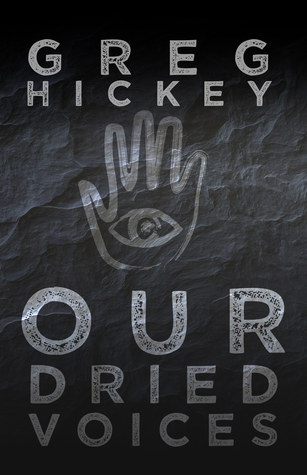
Our Dried Voices by Greg Hickey


Our Dried Voices
 

Title: Our Dried Voices 
Author: Greg Hickey
Publisher: Scribe Publishing Company
Publication Date: November 4, 2014
Pages: 234
ISBN: 978-1940368931
Genre: Dystopian / Science Fiction
Format: Paperback, eBook (.mobi / Kindle), PDF


Purchase The Book:


In 2153, cancer was cured. In 2189, AIDS. And in 2235, the last members of the human race traveled to a far distant planet called Pearl to begin the next chapter of humanity. Several hundred years after their arrival, the remainder of humanity lives in a utopian colony in which every want is satisfied automatically, and there is no need for human labor, struggle or thought. But when the machines that regulate the colony begin to malfunction, the colonists are faced with a test for the first time in their existence. With the lives of the colonists at stake, it is left to a young man named Samuel to repair these breakdowns and save the colony. Aided by his friend Penny, Samuel rises to meet each challenge. But he soon discovers a mysterious group of people behind each of these problems, and he must somehow find and defeat these saboteurs in order to rescue his colony.    


Book Excerpt:


I

The sound of the bells echoed across the colony. They sounded five times, and by the end of the fifth peal everyone had stopped what they were doing and started to walk toward the nearest source of the noise. The bells had a tinny, hollow sound to them. To be sure, it was unmistakably the sound of bells, but it lacked that rich, thunderous, rolling swell once heard in passing by an old church at the top of the hour. Instead, it was as though the sound of real bells had been recorded and re-recorded ad infinitum until only bell-like sounds now remained.

The bells called the people to the midday meal. All across the lush meadow, the colonists fell into a kind of reverie. Moments earlier, they had been romping through the meadow or splashing in the river with the joyful abandon of children, while others napped blissfully at the base of a modest hill or fornicated with some momentary lover in the shade of a spreading tree. But now their innocent laughter, their hushed excited voices, their intermittent shrieks of pleasure all ceased for an instant as they moved as one toward the sound of the bells. As soon as the fifth toll had faded in the air, the human noise resumed as though it had never been silenced. The colonists walked eagerly but unhurriedly, small, hairless, brown-skinned people, all barefooted and dressed in simple, cream-colored smocks.

The bell sounds came from the seven meal halls spread throughout the colony—long, tall, rectangular buildings erected from the black, craggy rock characteristic of the mountains of Pearl, now smoothed down and cut into bricks and painted a soothing off-white. Another smaller building abutted one end of each meal hall. Their wan stone façades matched those of the larger halls and there were no discernible entryways in their solid exteriors.

As the colonists entered each meal hall, they lined up along the right-hand wall to wait for their food. The walls were painted a pale sky blue, and on the far wall was a small square hole. One by one, each diner stepped forward in line, a small, red light above the hole flashed, a short clicking and whirring noise sounded and then a round, firm, dark brown cake appeared at the edge of the opening. One by one, each colonist took the proffered meal cake and carried it over to one of the many wooden tables or out into the meadow.

Near the front of the line at one hall, a male colonist turned to face the man behind him.

“Hellohoweryou?” said the first man.

“Goodthankshoweryou?” replied the second man.

“Goodthankshoweryou?”

“Goodthankshoweryou?”

The two men stared blankly at each other for a moment. Then the first man blinked and said “Goodweathertoday.”

The second bobbed his head and grinned. “Betterenyesterday.”

They continued to gaze at each other with vapid expressions until the first man turned around and stepped forward in line. The two men were right. It was Tuesday. It rained on Mondays. And thanks to the colony’s weather modification system, it had rained every Monday, and only on Monday, for hundreds of years.

***

When about half the colonists at this particular meal hall had received their food, an adult woman moved to the front of the line. A young boy, no taller than her waist, stood behind her. The woman stepped up to the wall, the red light above the hole flashed… and nothing happened. There was no clicking, no whirring, and no meal cake emerged from the hole in the milky blue wall. Some people a few places behind the first woman, by now so accustomed to the regular pace of the line, stepped forward in anticipation of her taking the food and continuing on. When the line did not move, they bumped awkwardly into the colonists in front of them, very much surprised that there should be a fleshy, breathing, human body in their path instead of empty space. Those closest to the front of the line fell silent when they saw the woman had not yet received her meal, and then the silence spread evenly and rhythmically down the line, like a row of pillowed dominoes falling to the floor. Yet all the colonists continued to wear the same insipid half-grin on their faces as they waited patiently for the food to be dispensed and the line to creep forward once more.

A long, loud, whining shriek from the young boy waiting with his mother at the front of the line broke through the stillness, and it was this sound, not the actual interruption of the food service, which seemed to have the greatest effect on those in the hall. The boy did not cry. He shed no tears, and the sound which emerged from his mouth was not a breathless and choked sobbing, or even the petulant howl of a child’s tantrum. It was a primal, animal moan that rose from the depths of his unfilled stomach, rushed up his throat with a cold and persistent ferocity and forced its way over his teeth, throwing his head back as it broke from his lips. No one tried to comfort the boy. His mother did not even turn around to look at him. Her weak smile faded, but she continued to stare at the dark hole in the wall, still waiting for her meal to appear. Then a child some dozen places back in the line picked up the boy’s howl, and then a woman farther behind did the same. Soon the entire line was wailing loudly.

Those colonists who had already received their meals hunkered over their cakes and stuffed their last bites into their mouths. One of them stood up, bumping hard into his table. The rest followed. They walked hurriedly to the door, brushing past the onlookers from outside who had gathered to see what all the noise was about. Those still in line stared dazedly at the others around them, at the now half-empty hall, an incipient question forming somewhere deep in their skulls.

A man in the middle of the line broke their unsteady ranks first. He ran, stumbling over tables and chairs bolted to the floor in his maddened dash toward the doorway. The rest of the line scattered in his wake. Out through the door they went, cracking bony limbs on the wooden furniture in their paths, pushing and trampling one another as they all tried to force their way through the doorway at once, like blood cells pumped through a clotted artery.


Those who had already finished their meals stood outside in a loose ring several meters away from the entrance of the food hall, and as the wild runners pushed their way through the door, they began to run as well, picking up the wail of the unfed as they went. They ran in no particular direction, a single mass exodus from the hall, teeming out across the gay green meadows, up and over the soft, undulating hills, and their cries rippled throughout the once-peaceful fields to fill the void left by the cessation of the bells with a sound far more vibrant than those stale chimes which had just called them to their uneaten meal.


Discuss this book in our PUYB Virtual Book Club at Goodreads by clicking HERE


About The Author:

Greg Hickey
   

Greg Hickey was born in Evanston, Illinois in 1985. After graduating from Pomona College in 2008, he played and coached baseball in Sweden and South Africa. He is now a forensic scientist, endurance athlete and award-winning writer. He lives in Chicago with his wife, Lindsay.

You can visit Greg’s website at www.greghickeywrites.com.   

Connect with Greg:
Author Website: www.greghickeywrites.com 
Author Blog: http://kinesophy.blogspot.com/
Facebook: https://www.facebook.com/GHWrites 
Twitter: https://twitter.com/greghickey5 Goodreads: https://www.goodreads.com/author/show/8421481.Greg_Hickey    



Our Dried Voices Tour Banner

Dark of the Heart, by Anne K. Edwards

Title:  Dark of the Heart
Genre:  Dystopian
Author:  Anne K. Edwards
Publisher:  Anne K. Edwards

Purchase on Amazon

A runaway son has returned to the Tyles family fold after an absence of several years.  A frightened boy when he left, Joey Tyles has returned a bitter man bent on revenge on the family that made his childhood a hell. 

Chapter One

Emily wiped sweat from her forehead with her fingers before climbing onto the old green car's rusted roof where Marty Pascellus sprawled. She plopped down beside him. “Them other cars is too hot,” she said as she slid into the shade.

Marty bobbed his head. “Yeh, burnt my arm day afore yesterday on that shiny stuff.” He nodded toward the strip of weather-pocked silver metal running across center of the door below them.

Pushing hair out of her eyes, Emily turned toward the street. “Look at that guy.” She pointed to a trampy-looking man with yellow hair who stood outside the metal fence. “How come he’s watching us? We ain’t doing nothing.”

Marty looked up from making squeaking noises by rubbing his dirty toes on the windshield, green eyes narrowed against the slant of the sun. "I don’t know. He looks kind of creepy.” He shrugged and said, “Me and Ty are gonna go see if that yeller cat had her kittens when he gets here. You want to come? Ma said after they're born, I can have a kitten. She give me some food for the cat." He moved to the rear of their perch and slid onto the trunk.

She shook her head. "Can't. I got to get home or Ma'll whip me." Sneaking away to play robbed it of fun. If Ma knew where she went, she’d get whipped with the belt.

Marty nodded and jumped down to join Ty who called to them as he approached.

Wish I could see the cat, but Ma says I got to be home in case she needs me. She'll get after me with the belt if I ain't there when she wakes up.

Emily shivered in the sunlight.

Sliding off the rear window and down the dented trunk, Emily landed on her feet, raising a small cloud of red dust. Worriedly, she examined a new tear in her stained blue shorts with a grimy hand. She didn't have any more that fit. If Ma saw the hole, she'd catch hell.

With lagging steps, she headed for the broken iron gates that stood permanently open. They seemed to welcome her to the junkyard that served as a playground for kids like her. The piles of worn-out appliances and old cars offered hiding places for their games and from the severe punishments parents often inflicted. When she could, she came here to pretend to go adventuring with Marty and Ty. Like today.

Pausing to watch a big black bug climb a weed stalk, she delayed going home until the last possible moment. The dirty stranger she’d seen outside the fence came toward her. He walked from Back Street that ran between the railroad tracks and the junkyard. He looked like the men in town who asked people in nice clothes for money. His baggy brown pants and blue jacket were dusty and wrinkled. He needed a shave, too, like Pa always did.

His squinty expression made her step back when he passed. Her teachers said not to trust strangers like him.

He grunted at her and crossed the street, trudging down Blair Avenue in the same direction she was going. She walked slowly behind, stopping once when he turned to look at her, then kept a distance between them. If he turned around, she could run back to the junkyard.

The dirty man didn’t pay her any more attention. He just hunched his shoulders and put his hands in his pockets as he plodded along the broken pavement.

She stopped in amazement when he went up the dirt path leading to her house and stepped onto the porch. Without knocking, he went inside.

Boy, was he going to be in trouble. People never did that, not even Bud's friends who Ma said were just noisy trash. Pretty soon there'd be a fight and the stranger would leave.

Wanting to avoid her mother, Emily went around to the kitchen. Nobody came in this way but her and flies. She was careful going up the rotting steps and pulling the screen door open so it didn’t squeal, pausing to count the long holes in the bottom half of the screen. She saw a new one. Bud's dog that was kept tied under the steps must've come up to the stoop and been digging at it again.

The hot kitchen smelled like rotten soup that always sat on the stove. An unformed longing for something better in her life filled Emily. Why couldn’t she live in a nice house? How come her house always smelled bad? Like the pee stink from Cooger's room that got in her clothes so the teacher made her sit in the back at school? The other kids whispered about her behind their hands when the teacher wasn’t looking. They made her hurt inside and want to cry. Like when Lorie and Ted went away.

She didn't want to think about school or the mean kids. She was too hungry. Sneaking off to play while Ma slept, she'd gone without breakfast. Now her stomach kept rumbling. Shooing flies off the jelly jar lid, she smeared a slice of stale bread with grape jelly. Nobody put the lid on tight so the jelly got thick and lumpy. Flies landed on the jar again and she went outside to share her snack with Bud's dog, Spot. One of these days she'd get him some good dog food instead of that dry stuff Bud got sometimes. He'd like that.

Licking her hand for the crumbs, the brown and white mongrel waggled his skinny self at her. She patted him on the head. He'd been chewing on his rope and got it all wet. If Bud wasn't careful, Spot would get loose and run off again. Then him and Jimmy Dowe couldn't go hunting like Bud always said they would.

She heard voices arguing through the open front room window.

Ma yelled she didn't want the dirty stranger in her house and he yelled back he'd go when he felt like it.

Ma said Al and Bud wouldn't want him here neither. Al was Pa. He and Bud both had bad tempers.

The dirty stranger didn't sound afraid of them or Ma. He sounded mean in that low voice he used.

Emily shivered.

Then their voices got lower and she couldn't hear what else they said.

Wiping the dog's saliva on her shorts, she returned inside. She couldn't go upstairs or she'd get stuck sitting Cooger. That wasn't any fun. He cried all the time and she got blamed for it. So she sat on the splintery wooden chair by the cellar door, making herself as small as possible. Out of sight, out of mind, she remembered somebody saying.

****

Joey Tyles counted the empty houses and vacant lots he passed. Lots more than he remembered. The Lees and Millers had gone. Like some disease had wiped them out. Town was dying and he'd come home to watch.

Home! The word left a bitter taste in his mouth. He turned onto Back Street that ran along the old railroad tracks. Laughter drew his attention. His gaze strayed toward the source of the sound, the junkyard. Brats played among the wrecks behind a long metal spike fence overgrown by vines and briars. He paused to wipe sweat from his forehead, watching them. One of the places he'd spent his childhood hiding from Ma and Al.

"Damn brats. Whyn't they shut up?" he grumbled aloud, thrusting hair out of his eyes. He stalked past the weed-choked gates. Bet that dumb watchman still sluiced it down. They better look out for him if he's still around. Ole Man Smif drank and got meaner'n hell. He hit me with a hunk of cement when I was a kid. Just because I called him a drunk. Ole fart'll probably be the gatekeeper in hell too. Joey winced at the remembered pain. He'd worn that bruise on his shoulder for weeks.

He tripped over an exposed tree root growing out of a large crack. Righting himself, he cursed.

Bogden hadn't changed. Confined by two mountains, it remained an uneven sprawl and needed a paint job. How could anyone with any gumption stay in this hole? Place was fit only for the rattlers that thrived in the scraggy woods. A shudder ran over his lean frame. Something he would never understand--why rattlers? Why did Claxton County and Bogden have a stupid annual hunt for them? Anything to bring in the tourists--a rattlesnake fair. He shuddered again.

Wonder if Margie Todder's pa still tries to bag them. Got bit three times. And Les Pettifer--silly bastard--put one in his glove compartment to keep thiefs out. Two bites--ole fool was stinko. Joey shook his head and turned onto Blair Avenue.

Out of the corner of his eye, he saw a small girl in blue shorts and red top following a ways behind. He swiveled his head to scowl at her. She stopped and waited, drawing back without actually moving.

Satisfied she’d been properly cowed, he continued walking. Teenage boys in an old souped-up red convertible roared toward him. They gunned the motor. He cursed their origins.

Ancient resentments flamed into new life. He'd had exactly nothing at their age, and they had all of it--money, girls, and hot cars. They jeered at his raised forefinger and disappeared around the corner.

He paused at the dirt path leading to the weathered old shack his family called home. He stared at it. Nineteen Blair Avenue. A garbage pile.

Bypassing a rusting black auto body half-buried in weeds, Joey ground summer-browned grasses to earth. Someone took the motor out and left it to rust. He snorted at the thought of anyone in this family having any mechanical ability. They didn't know enough to come in out of the rain.

He stepped onto the porch, the old familiar hostility projecting itself toward him. He acknowledged its presence and moved stiffly to meet it.

****

The screen door squealed sadly as Joey shoved it aside. The years fell away. He became again the boy who hated to come home, but had nowhere else to go.

The stuffy living room stank of unwashed people and stale beer. Faded blue-striped rags that passed for drapes were drawn against the morning sun. Piled clothing overflowed two chairs and filled one end of the old green couch. Probably the same crap sitting there the day he ran off all those years ago.

Movement at the side window startled him. As his eyes adjusted to the dimness, he saw the figure of his mother. She reclined in her old rocker outlined in the dusty light making its way inside. He paused to watch as she twitched and moaned. Had she ever gotten fat.

She jerked out of her semi-stupor. Swiveling her head in his direction, she glared up at him.

"Hello, ma." He forced down the old anger.

She pushed herself up on one elbow and demanded hoarsely, "What the hell you doing here? Thought we was rid of you." She shifted her body into the light so the sun turned her hair a bloody gray. Several empty beer bottles lay scattered about the rocker.

"I come to see you," he said. "Been a long time."

"Where you been? Jail?" She got clumsily to her feet, setting the chair to rocking.

"Aw, crap!" he growled in exasperation. "I'm here, that's all."

“Well, if you got plans to live off us, you best think again. We ain't got no money to feed you," she told him, putting her hands on her hips.

Still sounds like a drunken whore, he thought. Smelled like something rotten, too.

Plainly, she hadn't missed him. He searched her broad, lined face for some hint of feeling and saw only annoyance. "Got a room? I'm tired from hitching all night. Had to walk the last twelve miles."

"We don't want you here," she said, her voice hard.

"I'm staying," Joey told her grimly. "I don't want no arguing from you nor nobody else. I know you don't want me, and I don't care." He saw the rising anger in her expression. "I ain't gonna be around long," he offered as a sop. "Now I got to rest. Which room?"

"Your old one's still there." She shrugged and turned her back to him.

He understood her. She figured sleeping in the dirty hole he'd shared with Bud as a kid would drive him away. On the cluttered stairs he found a narrow passageway created by filled bags and boxes. He was tempted to push them all down the steps, but resisted the impulse. Stuff would never get picked up and he'd probably break his neck on it later.

At the top he found the stifling air almost unbreathable. From somewhere the stench of urine overflowed into the hallway. He gagged and shoved his head out the open window. "Jeezus!" he screeched. "It stinks up here."

"You don't like it, go somewheres else," she yelled up the stairwell as a baby began to squawl.

"I ain't," he yelled back. He intended to stay until his recent cellmates, Rufe and Jube Handler, came to meet him. They had plans--the three of them.

A cloud of dust rose as he opened the door to the corner room. Just like he'd thought. The place looked the same as he'd left it all those years before except the dust was deeper. "She ain't never gonna clean nothing," he grumbled and sneezed.

The room failed inspection. Dust coated the garbage dump furniture like a fuzzy fungus. Dust balls rolled across the bare wood floor as he forced open the windows. He sneezed again, making his throat hurt. The ache in his head threatened to return.

Shedding his blue cloth jacket, he flung the mattress over and dropped onto it. The stained, yellowed cover ripped under the weight of his body and the springs squealed as he sought comfort.

Feathers in the old pillow scratched his sweaty face through rough, gray material. He brushed at them with a weary hand, spitting lint. "If Ella hadn't run off... ." he mumbled, rolling onto his back. But she had, after he'd given her three months of his time. If she hadn't kept at him about dancing with other girls, he wouldn't have hit her. She'd have that eye for a long time. Too late, he missed her.

"And ole Sterrat! That bastard owes me. He didn't need to have me arrested. I'd put the money back when I got paid. Three months in jail for a lousy fifteen bucks. Damn him! I ain't gonna forget that neither." Thinking of the injustices committed against him, he drifted into the waiting dark where bad dreams always seemed to lurk.